
“His bottles had a lean, spare quality, as if the limestone had been turned up and everything else turned down.”
Bruno Barwise is almost two meters tall, blonde, South African by birth, and for a time he made wine on ancient limestone in the garrigue hills above Saint-Pargoire. The land is pure white chalk — ancient seabed shot through with shell fossils — surrounded by holm oak, rosemary, and wild lavender. Mediterranean in every sense.
He traveled widely before settling in the Hérault. The details of that path are sparse, but the wines he made are specific. His Carte Générale de la Lune is pure Grenache Noir, a wine people describe with words usually reserved for water — fluid, transparent, long. Night Moves takes a stranger route: ninety percent Grenache Noir, direct-pressed to make a blanc de noir, blended with ten percent Muscat de Hambourg for a wash of floral perfume through the glass.
He fermented with wild yeast in stainless steel, didn't fine, didn't filter, added zero or negligible sulfur. The winemaking was minimal in method but not in care — his bottles had a lean, spare quality, as if the limestone had been turned up and everything else turned down.
Barwise is no longer producing wine. What exists is what remains: a small number of bottles from a brief, focused chapter of winemaking on one of the Languedoc's most unusual hillsides. When they're gone, they're gone.
The limestone and the lavender remain.
WINES FROM BRUNO BARWISE
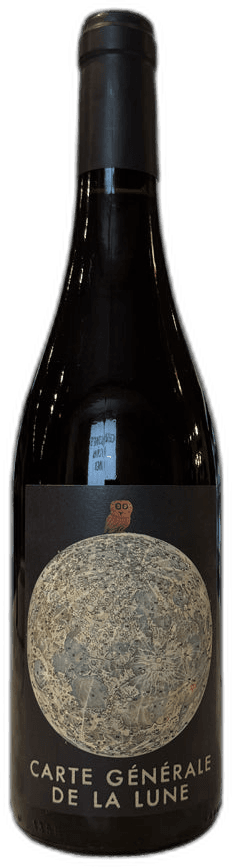
A map of the moon. Fluid, fresh, and complex from a South African-born vigneron working ancient limestone near Saint-Pargoire.
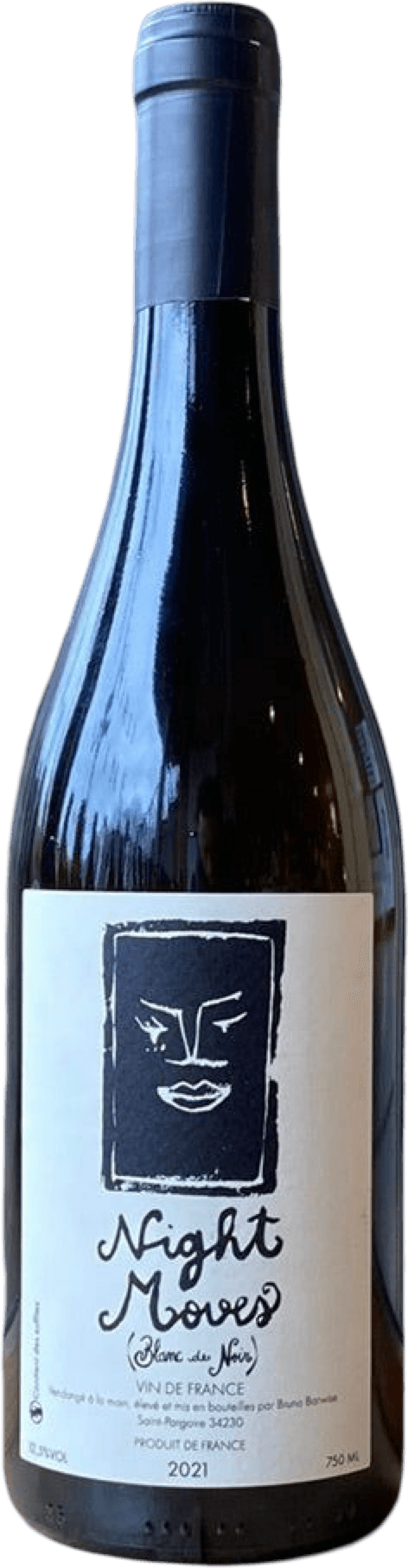
White wine from red grapes. Pithy backbone meets delicate aromatics — Mediterranean sunshine pressed into something ethereal.